
 By Henry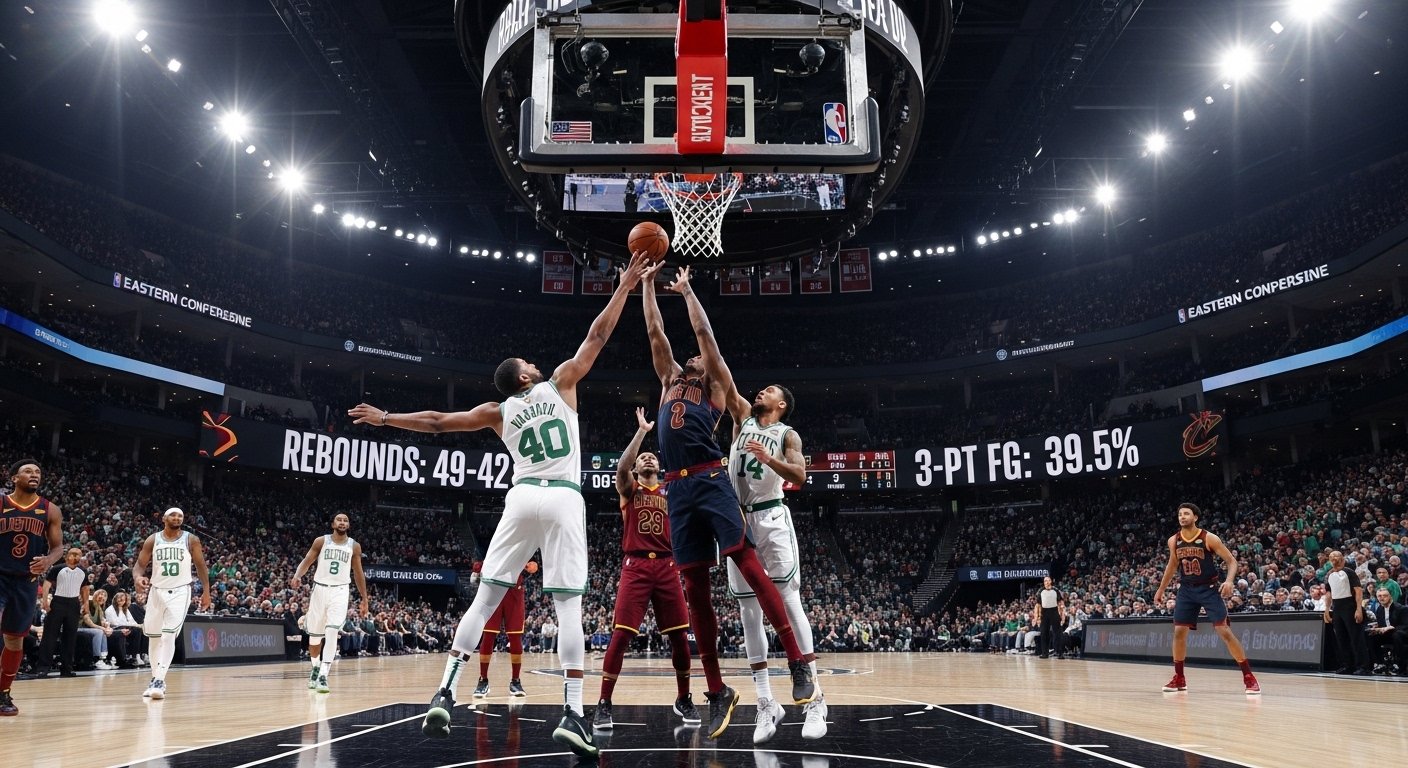
Picture this: two Eastern Conference heavyweights trading blows in Cleveland, with the Celtics pulling out a gritty 109-98 road win on March 8, 2026. If you’re searching for the celtics vs cleveland cavaliers match player stats, you already know this rivalry delivers fireworks every time. Whether you’re an NBA fan dissecting every possession, a sports bettor looking for edges, or a fantasy basketball player hunting value, this full breakdown has you covered. We’ll spotlight who stepped up, the statistical trends that shaped the outcome, and the X-factors that turned a tight game into a Celtics victory.
The Boston Celtics improved to 43-21 while the Cleveland Cavaliers fell to 39-25 in this Rocket Arena matchup. Boston jumped out to a 35-26 first-quarter lead and delivered a crushing 21-10 second quarter that created a 20-point halftime advantage. The Cavs fought back in the second half, but the Celtics’ superior rebounding and three-point shooting proved decisive.
Team totals tell the story quickly:
- Celtics: 37-of-84 from the field (44 percent), 15-of-38 from three (39.5 percent), 20-of-22 from the line (90.9 percent), 49 rebounds, 25 assists, 10 turnovers.
- Cavaliers: 35-of-86 from the field (40.7 percent), 13-of-45 from three (28.9 percent), 15-of-21 from the line (71.4 percent), 42 rebounds, 23 assists, 9 turnovers.
Boston outrebounded Cleveland 49-42 and won the three-point battle by a wide margin. Those edges, combined with strong bench play, explain why the Celtics left Ohio with the W.
Donovan Mitchell paced all scorers with 30 points on 9-of-18 shooting, adding seven rebounds and five assists while posting a team-best +8 plus-minus. He was the Cavaliers’ clear offensive engine and the only Cleveland player to crack 20 points. Evan Mobley followed with 24 points, eight rebounds, and three blocks, showing why he remains a defensive anchor. James Harden chipped in 19 points and dished 10 assists in 38 minutes, but the supporting cast struggled to keep pace.
On the Boston side, Jaylen Brown led the way with 23 points, nine rebounds, and eight assists. He nearly recorded a triple-double and finished with a sparkling +17 plus-minus. Jayson Tatum, playing in just his second game back from a torn right Achilles, contributed 20 points in 27 limited minutes. While his shot wasn’t falling at peak efficiency (6-of-16 from the field, 2-of-9 from three), his presence still stretched the floor and created opportunities for teammates. Payton Pritchard added 18 points and seven assists off the bench, and Sam Hauser drained five threes for 15 points.
The Celtics owned the glass, finishing with a seven-rebound edge that directly impacted second-chance opportunities and defensive possessions. Neemias Queta led the way with 11 rebounds in 36 minutes, while Baylor Scheierman hauled in 10 boards to go with 16 points. Jaylen Brown grabbed nine more, giving Boston a frontcourt trio that controlled the paint and the perimeter. Cleveland’s Evan Mobley (eight rebounds) and Jaylon Tyson (six) tried to battle back, but the Cavs simply could not match Boston’s collective effort on the boards. That rebounding margin translated into extra possessions and helped the Celtics control the tempo late in the game.
Boston shot a respectable 44 percent from the field and a scorching 39.5 percent from beyond the arc. Hauser and Scheierman combined for nine made threes off the bench, punishing Cleveland’s defensive rotations. In contrast, the Cavaliers managed just 28.9 percent from three despite launching 45 attempts. Mitchell and Mobley shot efficiently inside the arc, but the long-range misses proved costly. Free-throw accuracy also favored Boston (91 percent to 71 percent), especially in crunch time when every point mattered. These shooting percentages highlight why the Celtics pulled away: they converted their open looks while Cleveland forced too many contested shots.
Baylor Scheierman recorded the cleanest double-double of the night with 16 points and 10 rebounds. Neemias Queta posted 11 rebounds to pair with his modest four points. Jaylen Brown came agonizingly close to a triple-double, finishing with 23-9-8. On the Cleveland side, no player reached double figures in two categories, though Mitchell’s 30-7-5 line showed all-around impact. These double-double leaders underscored Boston’s balanced attack versus Cleveland’s reliance on star scoring.
One of the biggest X-factors was the bench. Boston’s reserves poured in 41 points, led by Pritchard (18), Scheierman (16), and Hauser (15). That depth allowed the starters to rest while maintaining momentum. Cleveland’s bench managed far less production, with Jaylon Tyson’s eight points as the high mark. The disparity in second-unit scoring gave the Celtics fresh legs and scoring bursts that the Cavaliers could not match.
Payton Pritchard posted the game’s highest plus-minus at +18, followed closely by Jaylen Brown at +17. These numbers reflect how Boston’s bench and starters alike elevated the team’s defensive rating when on the floor. Cleveland’s best mark belonged to Mitchell (+8), but several key rotation players finished deep in the negative. The Celtics’ ability to limit turnovers (just 10) and force the Cavs into inefficient shooting helped create a positive defensive environment that carried them to victory.
Beyond the box score, a few trends stood out. Boston’s dominance in the second quarter created separation that Cleveland never fully erased. The Celtics’ 3-point volume and accuracy, combined with their rebounding edge, prevented the Cavs from mounting a sustained comeback. Tatum’s return, even in limited minutes, added veteran poise. For the Cavaliers, Mitchell’s scoring and Harden’s playmaking kept them competitive, but the lack of bench support and poor outside shooting proved too much to overcome in this Eastern Conference rivalry clash.
- Donovan Mitchell dropped 30 but the Cavs still fell short.
- Jaylen Brown’s near triple-double and +17 rating powered Boston.
- Celtics bench outscored Cleveland’s by a huge margin.
- Rebounding (49-42) and three-point shooting (39.5 percent) decided the game.
- Jayson Tatum showed flashes in his return, setting up bigger things ahead.
This Celtics vs Cleveland Cavaliers match player stats breakdown shows exactly why Boston sits near the top of the East: depth, shooting, and rebounding that wear down even the toughest opponents. Whether you’re updating your fantasy lineup, placing your next bet, or just reliving the highlights, these numbers paint a clear picture of a well-earned road win.
What did you think of the performances? Drop your favorite stat or player take in the comments. And if you enjoyed this deep dive, check back for more NBA box score analysis from your favorite Eastern Conference rivalries.
You May Also Like: The Zuyomernon System Basketball: Hype or Hoops Revolution?
Who led the scoring in the Celtics vs Cavaliers game?
Donovan Mitchell scored a game-high 30 points for Cleveland, while Jaylen Brown led Boston with 23.
How many rebounds did the Celtics frontcourt record?
The Celtics grabbed 49 total rebounds compared to Cleveland’s 42, with Neemias Queta (11), Baylor Scheierman (10), and Jaylen Brown (9) leading the charge.
Which Cavaliers player had the highest plus-minus rating?
Donovan Mitchell finished at +8, the best mark among Cleveland players.
Did any players record a double-double in the Celtics vs Cleveland Cavaliers matchup?
Yes, Baylor Scheierman posted 16 points and 10 rebounds. Jaylen Brown came close with 23-9-8.
What were the shooting percentages for Jayson Tatum and Donovan Mitchell?
Tatum went 6-of-16 from the field (37.5 percent) and 2-of-9 from three. Mitchell shot 9-of-18 (50 percent) from the field and 3-of-9 from three.
How did the benches compare in this game?
Boston’s bench scored 41 points while Cleveland’s contributed just 13, giving the Celtics a massive advantage in depth.
Why did the Celtics win despite Tatum playing limited minutes?
Superior rebounding, three-point shooting, and bench production allowed Boston to control the game even with Tatum on a minutes restriction.